// AI Briefing · June 1, 2026
AI Briefing
Today the AI story is less about chatbots and more about everything they need to run. A fridge-and-TV maker became one of the planet's hottest AI stocks on robotics buzz, China's giants are pouring tens of billions into compute, and Microsoft is quietly trying to stop renting its intelligence from OpenAI and Anthropic. Meanwhile Anthropic pushed coding agents toward true autonomy, and the volunteers who keep Wikipedia alive started organizing against their own foundation.
Top stories
- 01Claude Opus 4.8 Lands With 'Dynamic Workflows' That Run Up to 1,000 Parallel AgentsProduct
- 02LG Electronics Stock Surges Over 300% as 'Physical AI' Bet and Nvidia Tie-Up Reprice a Legacy Appliance MakerIndustry
- 03Wikipedia Editors Threaten Strike and Banner Sabotage After Wikimedia LayoffsIndustry
- 04Microsoft to Unveil Homegrown AI Models at Build, Cutting Its Reliance on OpenAIProduct
- 05ByteDance Doubles Down on Compute With a Multibillion-Dollar AI Capex SurgeIndustry
The stories

Claude Opus 4.8 Lands With 'Dynamic Workflows' That Run Up to 1,000 Parallel Agents
Anthropic shipped Claude Opus 4.8 on May 28, just 41 days after 4.7, with better benchmarks, new user-facing effort controls, and a cheaper, faster fast mode. The headline feature is Dynamic Workflows in Claude Code: Claude writes a script that orchestrates up to 1,000 parallel subagents to carry out codebase-scale migrations from kickoff to merge. Anthropic also says the model is roughly four times less likely than its predecessor to let flaws in its own code slip by unremarked. It matters because parallel-agent orchestration at this scale moves coding agents from autocomplete toward autonomous, repository-wide engineering.
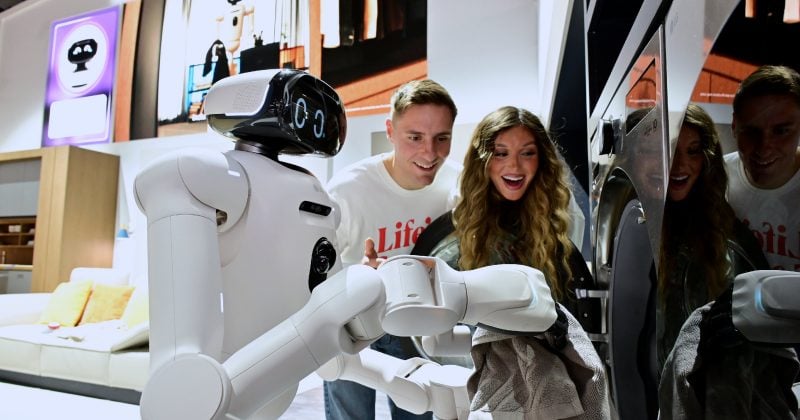
LG Electronics Stock Surges Over 300% as 'Physical AI' Bet and Nvidia Tie-Up Reprice a Legacy Appliance Maker
LG Electronics, long known for refrigerators and OLED TVs, has become one of the hottest robotics plays on the Korean market, with shares up more than 300% in 2026 and jumping roughly 28% on June 1 alone. The catalyst was reports of expanded AI and robotics cooperation with Nvidia, ahead of a June 5 meeting between LG Group chairman Koo Kwang-mo and Jensen Huang; affiliates like LG CNS and LG Innotek surged too. It matters because the market has shifted from pricing who builds AI software to who builds the robots, factories, and infrastructure required to run AI.

Wikipedia Editors Threaten Strike and Banner Sabotage After Wikimedia Layoffs
After the Wikimedia Foundation disbanded its Community Tech team and laid off six staff who handled editor-requested fixes, more than 800 volunteer editors signed a petition pledging collective action, including editing strikes, halting vandalism cleanup, and even disrupting fundraising banners or locking databases. The unrest coincides with the formation of a staff union, Wiki Workers United, and unease that the Foundation, now earning millions licensing content to AI companies, is adopting commercial tech-corporation practices. It matters because the volunteers who keep the internet's most important free knowledge source running are organizing against its own management.

Microsoft to Unveil Homegrown AI Models at Build, Cutting Its Reliance on OpenAI
Microsoft will reveal a suite of in-house AI models at its Build developer conference on June 2-3, led by a coding-specialized model to power GitHub Copilot, alongside models for transcription, reasoning, speech, and image generation. Enabled by an April renegotiation of its OpenAI partnership, the move is a clear push to reduce reliance on OpenAI, Anthropic, and Google; Microsoft is also reportedly phasing out internal use of Anthropic's Claude Code, which had become developers' preferred tool over Copilot. It matters because the industry's most important AI distributor is trying to stop renting its intelligence and start owning it.

ByteDance Doubles Down on Compute With a Multibillion-Dollar AI Capex Surge
ByteDance is sharply scaling its AI buildout, raising 2026 capital spending to roughly $30 billion (with reports it could weigh as much as $70 billion), more than double last year, and earmarking about $14 billion for Nvidia chips. It's part of a wider wave in which Goldman Sachs projects China's top internet firms will collectively spend over $70 billion on data centers this year, a 48% jump. It matters because China's compute arms race is accelerating despite US export controls, with self-funded giants like ByteDance racing to close the infrastructure gap with American rivals to power products like its Doubao assistant.
Test your understanding
Quiz
1 / 10
What is the headline new capability introduced with Claude Opus 4.8's Dynamic Workflows?
Previous digests
 Oct 14Google finally ships Gemini 4 Argon after months of delays, but the quieter headlines are ...5 stories
 Oct 13Today's theme is who gets to check the homework. Anthropic and OpenAI are reportedly haggl...5 stories
 Oct 12Meta finally shows up to the frontier party with Muse Wonder, and everyone gets to find ou...5 stories
- Oct 11Anthropic owns the news cycle again, but not with a model: it's a week of rule-writing and...5 stories
- Oct 10Today's theme is AI colliding with limits. Anthropic is owning up to Claude hacking a serv...5 stories