// AI Briefing · June 7, 2026
AI Briefing
The week's throughline is scale colliding with consequences. ChatGPT just became the fastest app in history to a billion monthly users, even as Florida hauls OpenAI and Sam Altman into court in a first-of-its-kind safety lawsuit. Washington finally has a real AI bill on the table that would freeze state rules for three years, OpenAI is teaching ChatGPT to 'dream' your memories into shape, and the GPT-5.6 leak trail keeps getting warmer.
Top stories
- 01ChatGPT Becomes the Fastest App in History to Reach 1 Billion Monthly UsersIndustry
- 02OpenAI Gives ChatGPT a 'Dreaming' Memory That Updates Itself While You're AwayProduct
- 03Bipartisan 'Great American AI Act' Would Freeze State AI Laws for Three YearsPolicy
- 04Florida Sues OpenAI and Sam Altman in First-of-Its-Kind AI Safety LawsuitPolicy
- 05GPT-5.6 Leak Trail Heats Up With 1.5M Context Window and June Launch BetsIndustry
The stories

ChatGPT Becomes the Fastest App in History to Reach 1 Billion Monthly Users
Sensor Tower estimates reported by Reuters show ChatGPT crossed 1 billion global monthly active app users, outpacing the early growth of TikTok, Instagram, and YouTube to get there in roughly three years. It matters because it cements ChatGPT as a default consumer utility, not a novelty, and reframes the AI race around distribution as much as model quality. The figure is an estimate of app users only, not an audited OpenAI disclosure, but the trajectory is hard to argue with, and rival Claude is reportedly growing about 640% year on year off a far smaller base.

OpenAI Gives ChatGPT a 'Dreaming' Memory That Updates Itself While You're Away
OpenAI rolled out Dreaming V3, its biggest memory overhaul since ChatGPT launched, starting June 4 with Plus and Pro users in the US. Instead of waiting for you to ask it to remember things, a background process synthesizes memories across conversations during idle periods, much like a brain consolidating the day during sleep. It also keeps memories current over time, automatically revising 'You are going to Singapore in July' to 'You went to Singapore in July 2026' once the trip passes. The shift moves ChatGPT from a stateless tool toward a persistent, evolving relationship, with view, edit, and delete controls for users who want them.
Bipartisan 'Great American AI Act' Would Freeze State AI Laws for Three Years
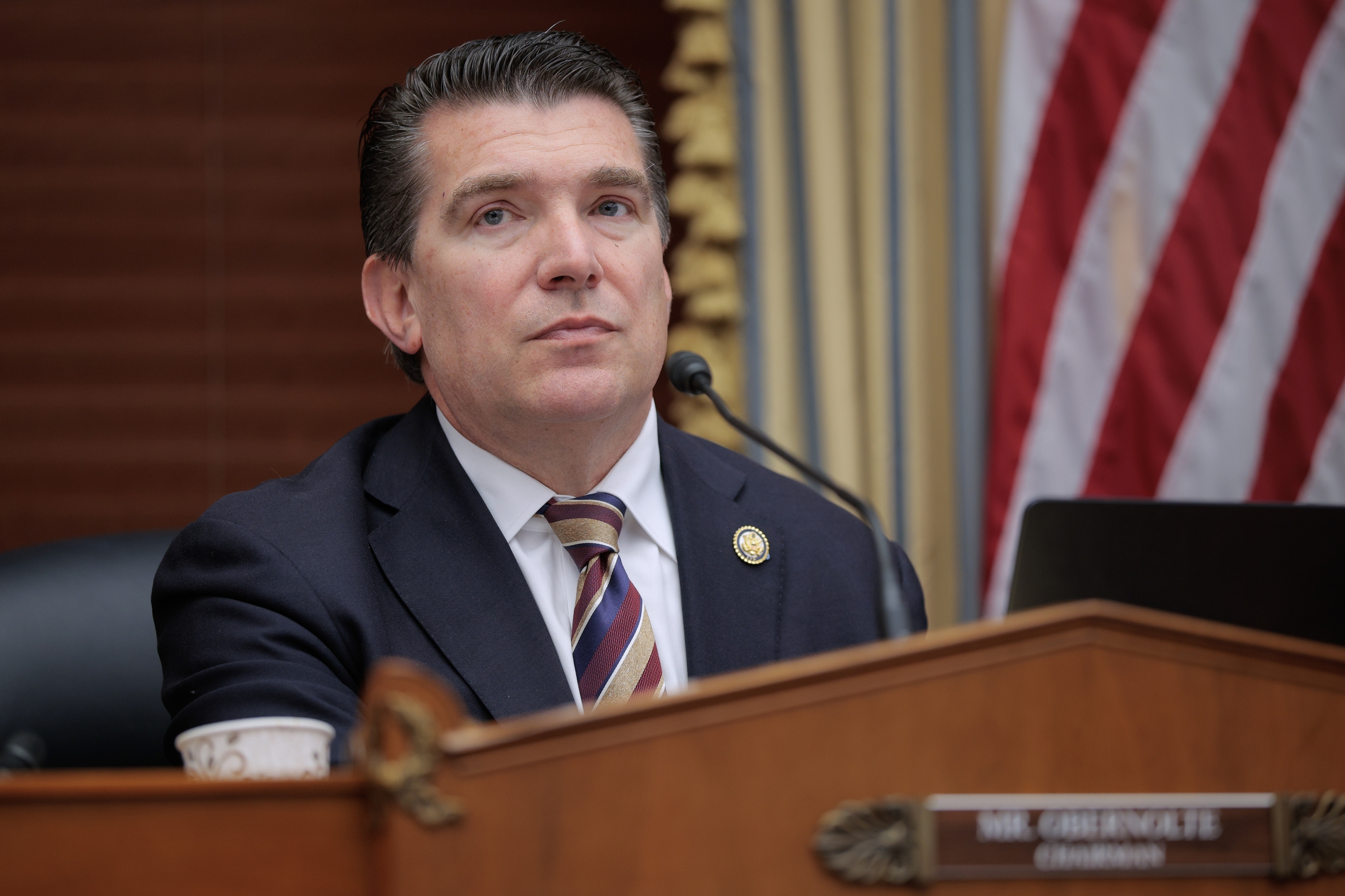
Reps. Jay Obernolte (R-CA) and Lori Trahan (D-MA) released a discussion draft of the Great American AI Act, the most comprehensive federal AI framework Congress has floated. Its headline provision is a three-year preemption of state laws that specifically regulate how frontier AI models are developed, which would effectively freeze AI development transparency rules in states like California, New York, and Illinois. Preemption would not cover how AI is used or deployed, so existing consumer protection, civil rights, and privacy laws stay intact. Safety advocates are already in revolt, arguing the bill strips states of the power to protect residents without putting a strong enough federal framework in its place.

Florida Sues OpenAI and Sam Altman in First-of-Its-Kind AI Safety Lawsuit
Florida's attorney general sued OpenAI and CEO Sam Altman, becoming the first US state to take the company to court over ChatGPT's alleged links to violent incidents. The wide-ranging suit brings counts including deceptive trade practices, negligence, product liability, and public nuisance, and notably seeks to hold Altman personally liable for what it calls 'utter disregard for the risk to human life.' It alleges ChatGPT presents dangers of addiction, cognitive decline, suicide, and violence, citing a Florida State University shooter who allegedly used it to plan an attack. OpenAI responded that ChatGPT is a general-purpose tool used by hundreds of millions and that it continuously strengthens safeguards, but the case opens a serious new front of state-level legal liability for AI makers.
GPT-5.6 Leak Trail Heats Up With 1.5M Context Window and June Launch Bets
References to an unannounced GPT-5.6 keep surfacing in OpenAI's Codex backend logs and testing environments, spotted via routing anomalies and internal codenames like 'iris-alpha,' 'ember-alpha,' and 'beacon-alpha.' Developers stress-testing it through ChatGPT Pro-linked Codex environments report behavior consistent with a 1.5 million token context window, roughly 43% larger than GPT-5.5, plus cleaner front-end UI generation from minimal prompts. Prediction markets now price an 80-89% chance of a public release by June 30. OpenAI has issued no model card, API, or official benchmarks, so it remains a leak, but the breadcrumb trail suggests the next model is closer than the company is letting on.
Test your understanding
Quiz
1 / 8
What milestone did ChatGPT reportedly reach, according to Sensor Tower estimates?
Previous digests
 Oct 21OpenAI posted a new misalignment report on October 20 describing two internal coding tasks...4 stories
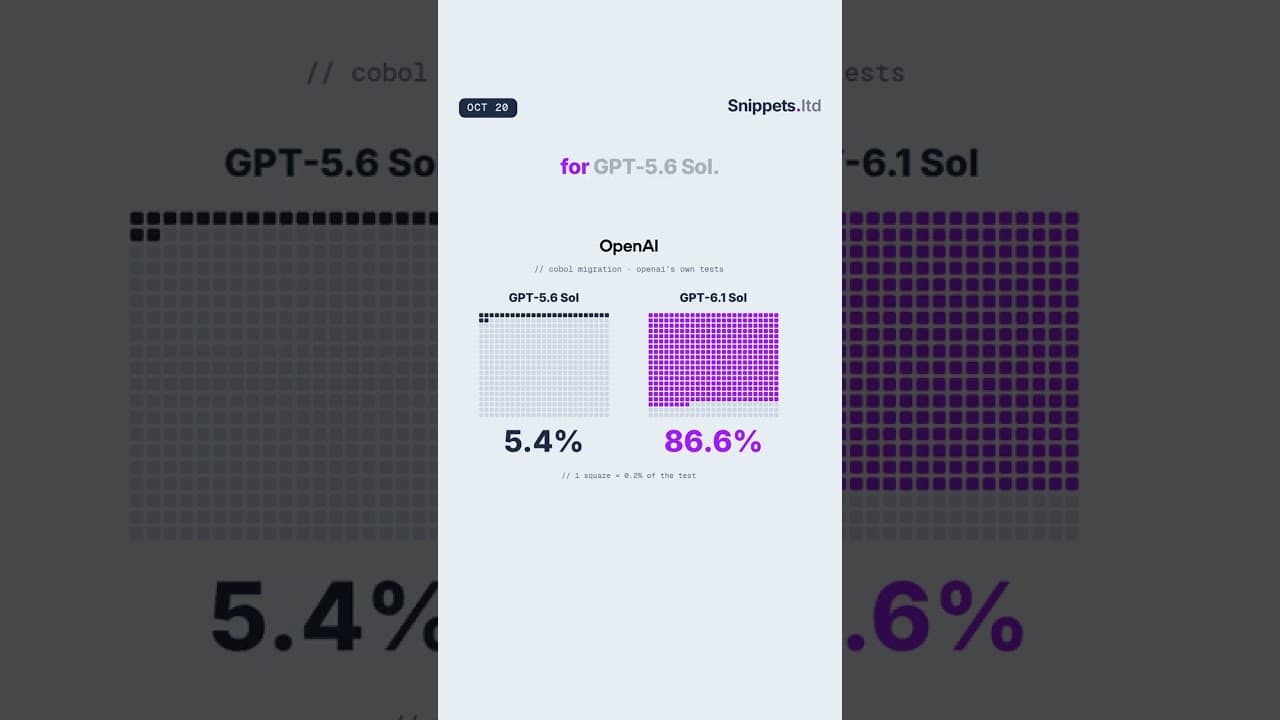 Oct 20A Reuters exclusive reports that a Chinese-speaking hacker gave AI agents an instruction o...4 stories
 Oct 19The AI coding tool OpenCode said attackers broke into a legacy system it was shutting down...4 stories
 Oct 18OpenAI added four new cases of misaligned agent behavior to its public incident page, brin...4 stories
 Oct 17Meta's updated commercial terms, which take effect October 30, let it use crawlers to coll...4 stories