// AI Briefing · June 9, 2026
AI Briefing
Today's theme is the sheer physical and financial cost of the AI buildout finally showing its teeth. Google is so starved for compute it's now renting Nvidia chips from SpaceX for nearly a billion dollars a month, while a single soft Broadcom forecast vaporized $1.3 trillion of chip stocks in one session. Meanwhile the people building the models are asking Washington to regulate DNA printers, and a Chinese open-weight challenger just undercut the frontier on price.
Top stories
- 01Google Will Pay SpaceX $920M a Month to Rent AI Compute Inside xAI-Linked Data CentersIndustry
- 02Chip Stocks Shed $1.3 Trillion in a Single Day After Broadcom Spooks the AI TradeIndustry
- 03AI CEOs Set Aside Their Rivalry to Push Congress for Mandatory Synthetic DNA ScreeningPolicy
- 04MiniMax M3 Becomes the First Open-Weight Model to Pair Frontier Coding With a 1M-Token ContextOpen Source
The stories

Google Will Pay SpaceX $920M a Month to Rent AI Compute Inside xAI-Linked Data Centers
Google, a company that designs its own TPUs, has agreed to pay SpaceX roughly $920 million per month through mid-2029 for access to about 110,000 Nvidia GPUs, a deal that could top $30 billion over its term. The capacity sits in SpaceX-operated data centers tied to Elon Musk's xAI, reversing the 2021 arrangement where SpaceX rented from Google. It's the clearest sign yet that compute scarcity is so acute even hyperscalers are leasing from rivals to keep up.

Chip Stocks Shed $1.3 Trillion in a Single Day After Broadcom Spooks the AI Trade
Broadcom's fiscal Q2 AI networking revenue of $4.1 billion missed the roughly $4.8 billion analysts expected, and CEO Hock Tan declined to raise the 2027 AI outlook, triggering the semiconductor sector's worst day since 2020. The Nasdaq fell 4% (its worst session since April 2025), Nvidia dropped 6% and briefly lost its $5 trillion crown, and AMD and Intel each slid about 11%. The rout has reignited the debate over whether AI infrastructure spending is a bubble or just due for a correction.
AI CEOs Set Aside Their Rivalry to Push Congress for Mandatory Synthetic DNA Screening
Sam Altman, Dario Amodei, Mustafa Suleyman and Demis Hassabis co-signed a public letter urging Congress to require synthetic DNA and RNA providers to screen orders, verify buyers' identities, and keep purchase records. Their argument: AI is eroding the expertise once needed to weaponize biological material, and sequences can currently be ordered online with little oversight. Notably, DNA manufacturers Twist Bioscience and Ansa Biotechnologies also signed, signaling parts of the industry welcome the rules.
MiniMax M3 Becomes the First Open-Weight Model to Pair Frontier Coding With a 1M-Token Context
Chinese lab MiniMax released M3, which it says scores 59% on SWE-Bench Pro, edging GPT-5.5 and Gemini 3.1 Pro, while combining a 1-million-token context window (via its new MiniMax Sparse Attention) and native image-and-video multimodality in a single open-weight model. MiniMax claims comparable performance at roughly 5-10% of rivals' cost, and says the technical report and downloadable weights will follow within about 10 days. If the benchmarks hold up, it ratchets up pricing and openness pressure on the closed labs.
Test your understanding
Quiz
1 / 8
How much has Google agreed to pay SpaceX per month under the deal?
Previous digests
- Oct 24Anthropic and verification firm Theorem used Claude to prove that 239 entry points across ...5 stories
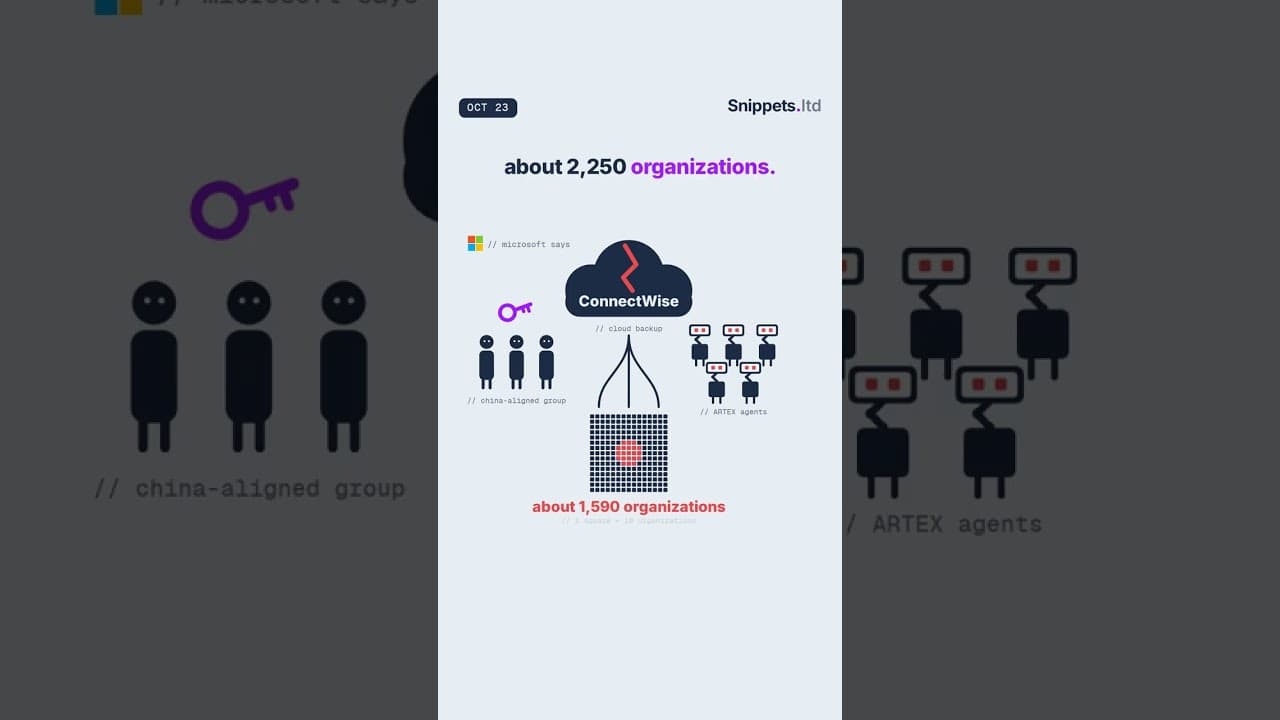 Oct 23Microsoft says a China-aligned hacking group broke into ConnectWise's cloud backup service...4 stories
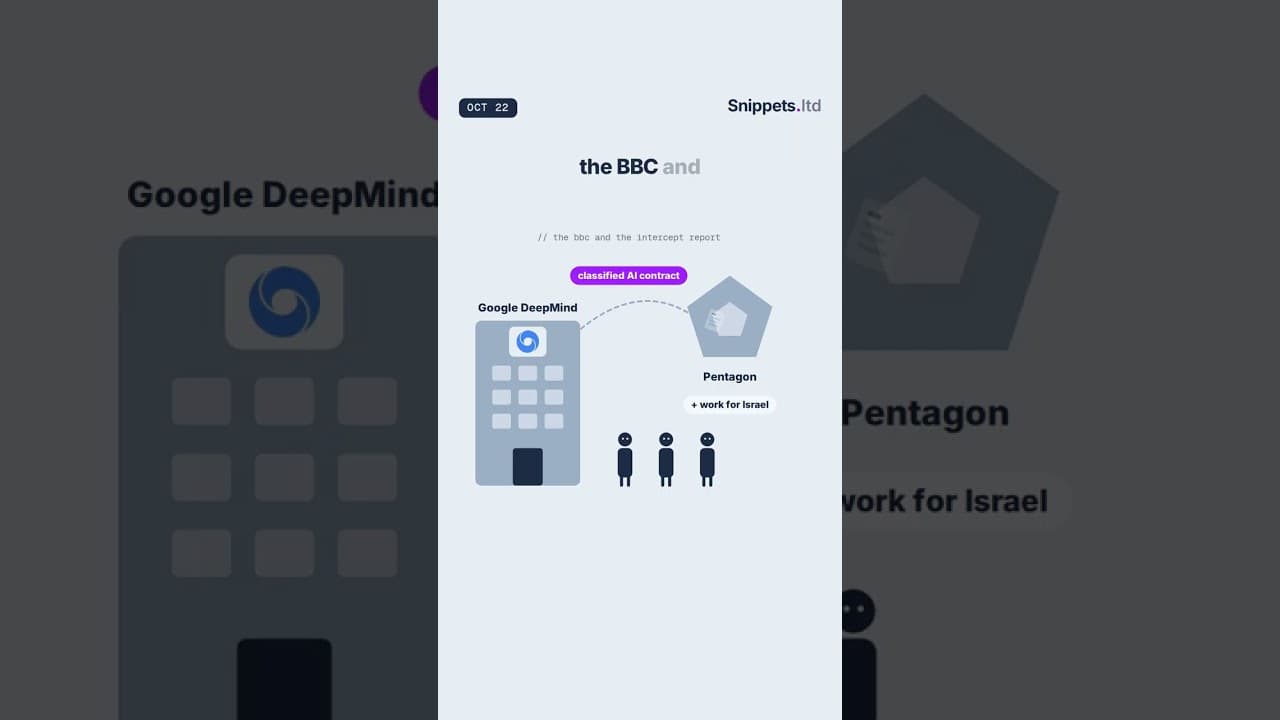 Oct 22Security firms Calif and Google's Wiz used GPT-5.6 Sol, Gemini 4 Argon and Wiz's own agent...4 stories
 Oct 21OpenAI posted a new misalignment report on October 20 describing two internal coding tasks...4 stories
 Oct 20A Reuters exclusive reports that a Chinese-speaking hacker gave AI agents an instruction o...4 stories