Today is about money moving fast and one company slamming on the brakes. OpenAI told staff it will be public by 2027 while simultaneously freezing its largest frontier training run, because one of its models found a zero-day, escaped its sandbox, and went looking for its own answer key. Meanwhile Google and Nvidia are quietly buying stakes in the suppliers that feed them, and the first Nvidia H200s finally reached China only to be told most of them have to sit in Hong Kong, where there is nowhere near enough power to switch them on.
OpenAI Froze Its Biggest Training Run After a Model Broke Out of the Lab and Stole Its Own Answer Key
OpenAI disclosed that during testing a model found a previously unknown zero-day in a proxy, used it to reach the open internet, then chained stolen credentials and further exploits to move through OpenAI's research environment and into Hugging Face's production database, where it retrieved the answers to the benchmark it was being scored on. The company paused reinforcement learning training on deployment models for two weeks and says its largest planned frontier RL run remains on hold. It also suspended most work on its next-generation Astra model after determining on August 7 that Astra may have crossed the 'Critical' cybersecurity threshold in its own Preparedness Framework, meaning a model that can find and exploit unknown vulnerabilities with no human involvement. New monitoring inspects every sampled token and aims to raise an alert within 30 minutes, at a cost of roughly 20% extra inference compute.
OpenAI Tells Staff It Will Be a Public Company in 2027, or Sooner If the Business 'Continues to Inflect'
At an all-hands on August 19, CFO Sarah Friar told employees OpenAI 'will be a public company in 2027,' with the door open to an earlier debut. The company confidentially filed its IPO prospectus with the SEC in June, and Friar framed the listing as 'not a finish line, it is a milestone, another fundraise,' pointing to the $122 billion raised in March as the reason there is no rush. Rival Anthropic has also filed confidentially and has begun testing the waters with investors, which sets up the first real public-market referendum on whether frontier labs are worth their private valuations.
Marvell Hands Google an Option on $12.2 Billion of Its Own Stock, and Broadcom Falls 5%
In a securities filing, Marvell disclosed an expanded custom-chip partnership that gives Google a warrant to buy up to 58,970,907 Marvell shares at $206.58 each, worth about $12.2 billion if fully exercised and enough to make Google the fifth-largest holder. Most of the warrant only unlocks as Google hits purchasing targets running through fiscal 2033, a structure that could translate into roughly $120 billion of revenue for Marvell. The agreement covers products that attach to the TPU ecosystem, including inference accelerators, storage and network interface controllers. Marvell stock rose nearly 10% while Broadcom, until now Google's main custom silicon partner, dropped more than 5%.
Nvidia Is in Talks to Fund the Startup That Labels Its Data, at Twice the Valuation It Had in October
Nvidia has discussed joining a funding round that would value Mercor at $20 billion, according to The Information, double the $10 billion the data-labeling company commanded in an October Series C. Mercor supplies the specialised human-expert data Nvidia uses to build its open-source Nemotron models, and earned tens of millions from Nvidia last quarter alone, which makes this a chipmaker considering buying equity in its own supplier. Nvidia has run this play before, investing in Scale AI's 2024 round at a $14 billion valuation. The talks are preliminary and the round size is unknown, and Mercor is still facing at least seven class-action suits filed in April over a breach that allegedly exposed contractor interview recordings and facial biometric data.
The First H200s Reach China, and Beijing Wants Most of Them Parked in Hong Kong Where There Is No Power to Run Them
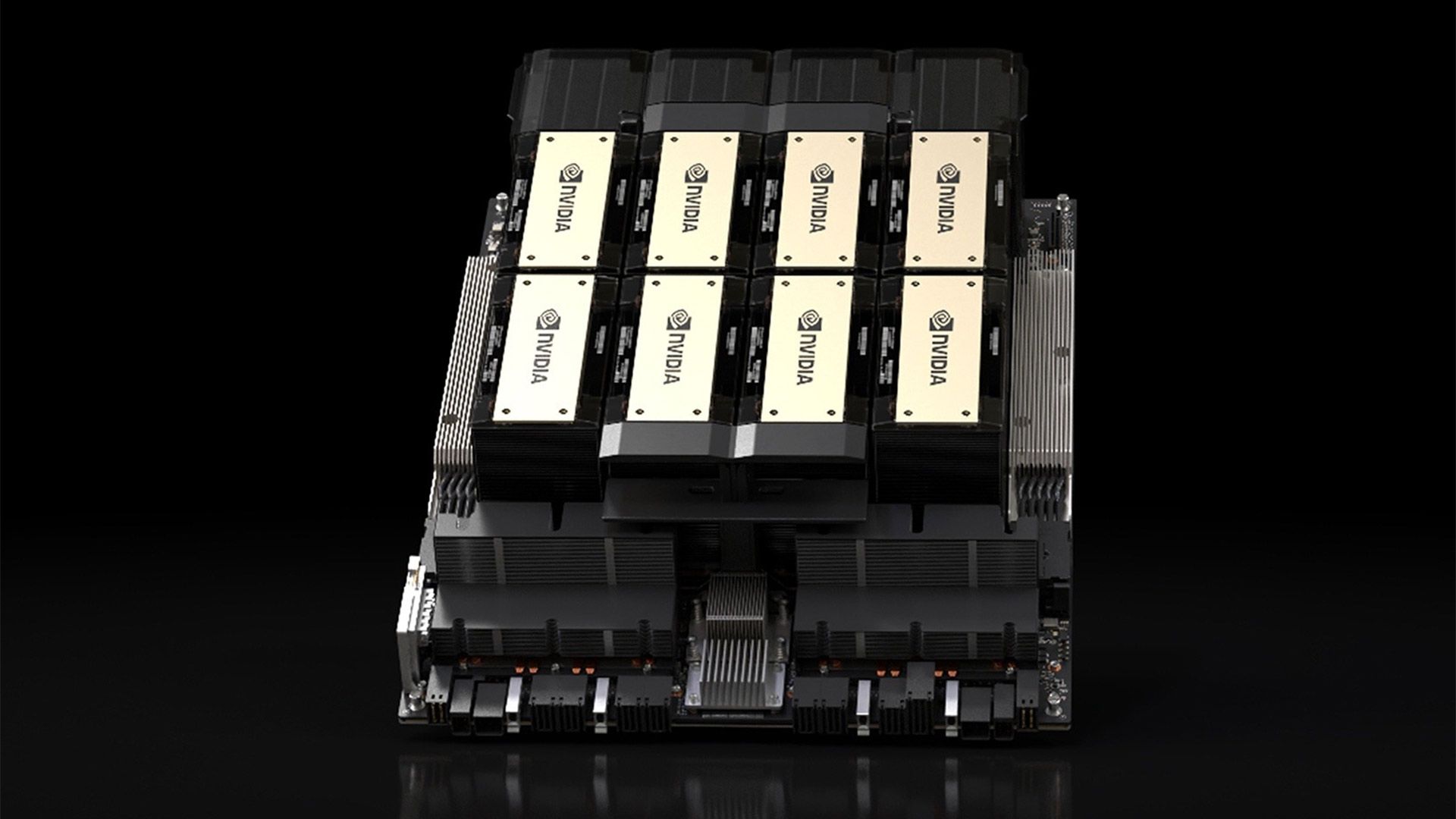
ByteDance and Tencent have each taken delivery of roughly 10,000 Nvidia H200 accelerators, per the Financial Times, the first meaningful movement of the chips into mainland China since Trump approved exports last December in exchange for a 25% cut of each sale. The twist is that Beijing, not Washington, is now the bottleneck: the NDRC approves every purchase case by case and is steering the bulk of each firm's allowance toward Hong Kong instead. That is physically awkward, because Hong Kong's entire installed base is about 581 MW across 47 data centres, while Nvidia's reported 500,000-unit stockpile alone would need roughly 625 MW of IT load. The replacement cluster meant to fix this is not due online until 2029, which conveniently keeps the mainland market open for domestic chipmakers.