Today's theme is trust, and who gets to verify it. A security lab showed that the SHA pinning every AI coding agent relies on was never actually being checked, meaning the safest thing you could do with a plugin protected you from nothing. Meanwhile Trump wants an 'AI Force' to oversee the industry, King Charles asked its CEOs to slow down, and two Chinese labs quietly shipped a 600B agentic model and an open-weight CT scanner that outread 23 of 26 radiologists.
The Thing That Was Supposed to Make AI Plugins Safe Was Never Being Checked
Air Security disclosed Plugin4Shell, a zero-click RCE that hits Claude Code, OpenAI Codex, GitHub Copilot and Gemini CLI with the same design flaw: each agent checks out the pinned commit but never verifies the commit actually landed. An attacker who controls a plugin repo can create a branch named after the 40-hex pinned SHA, make it the default, and git silently prefers the branch over the commit. Because agents auto-update plugins in the background, a plugin you already installed and already trusted gets swapped for malicious code with no prompt and no click. Anthropic patched in Claude Code 2.1.179 and OpenAI in Codex 0.146.0; Microsoft has shipped nothing and Google is not fixing Gemini CLI at all, having deprecated it.
StepFun Shipped a 600B Agent Model at a Dollar per Million Tokens and Will Open the Weights in Three Weeks
StepFun launched Step 5 Preview, a 600B-parameter sparse MoE with 27B active per token, a 92-layer narrow-deep stack and a 1M-token context aimed squarely at long-horizon agentic work, with particular strength claimed in finance. The architecture adds sparse grouped-query attention with block-wise token merging, which StepFun says cuts indexer and top-k selection cost to roughly one-eighth of a denser baseline. API access went live the same day at $1 per million input tokens and $2.70 output, and the weights are scheduled to open on October 15. It scored 44 on the Intelligence Index, matching Kimi K3 Max, which means a frontier-adjacent agentic model is about to become something you can run yourself.
Alibaba Open-Sourced a CT Reader That Beat 23 of 26 Radiologists
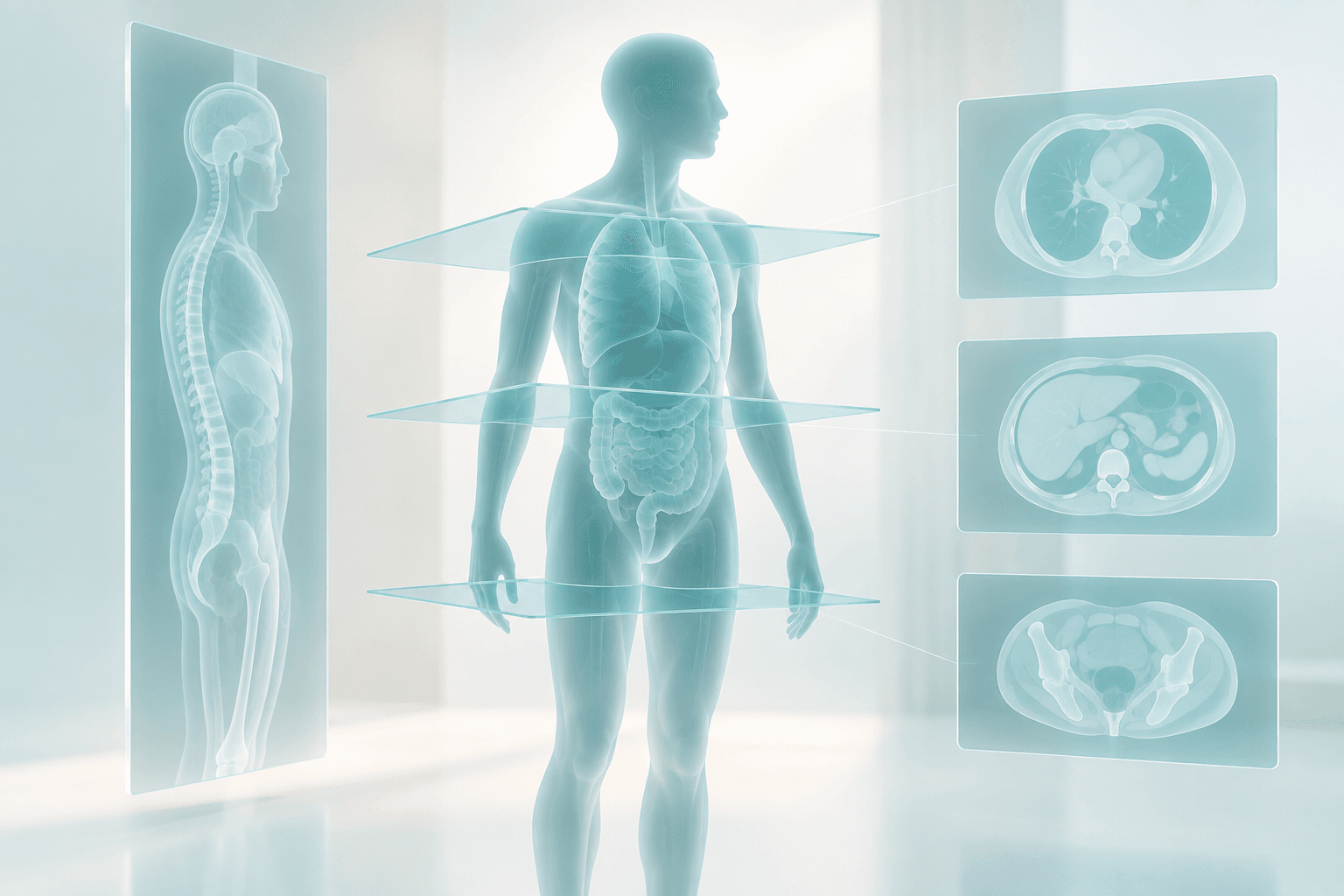
DAMO Academy published RADAR in Science and released the code and weights on GitHub under Apache 2.0 a day later. It is a generalist vision-language model trained on over 400,000 contrast-enhanced abdominal CT exams and 15 million anatomy-aware image-text pairs, learning directly from clinical reports with no manual annotation, and it flags 146 findings across 18 organs at an average AUC of 0.913 over nearly 40,000 real-world examinations. In a reader study against 26 radiologists from multiple hospitals its average accuracy beat 23 of them. When doctors used it as a prompt, sensitivity rose about 10%, reading time fell more than 30%, and junior readers approached senior-level performance.
Trump Wants an 'AI Force' Modeled on the Space Force, and a Czar Where 'Only High I.Q. Individuals Need Apply'
Trump announced on Truth Social that he is creating an 'AI Force' patterned on the Space Force and will soon name a new AI czar, reviving a role the White House had no plans to fill six months ago after David Sacks left in March. He offered no detail on what the AI Force would do, what budget it would have, or where in the federal government it would sit, saying only that Washington would 'not in any way hinder or stifle' AI's growth and would police 'BAD' behavior through existing criminal and civil law. It lands in the middle of a month where Amodei, Altman, Musk and Hassabis have all called for slowing down, and where a New York Times-Siena poll found 61% of likely voters oppose building data centers to power AI, including 47% of Republicans.
King Charles Summoned the AI Labs to Scotland and Asked Whether It Is Already Too Late
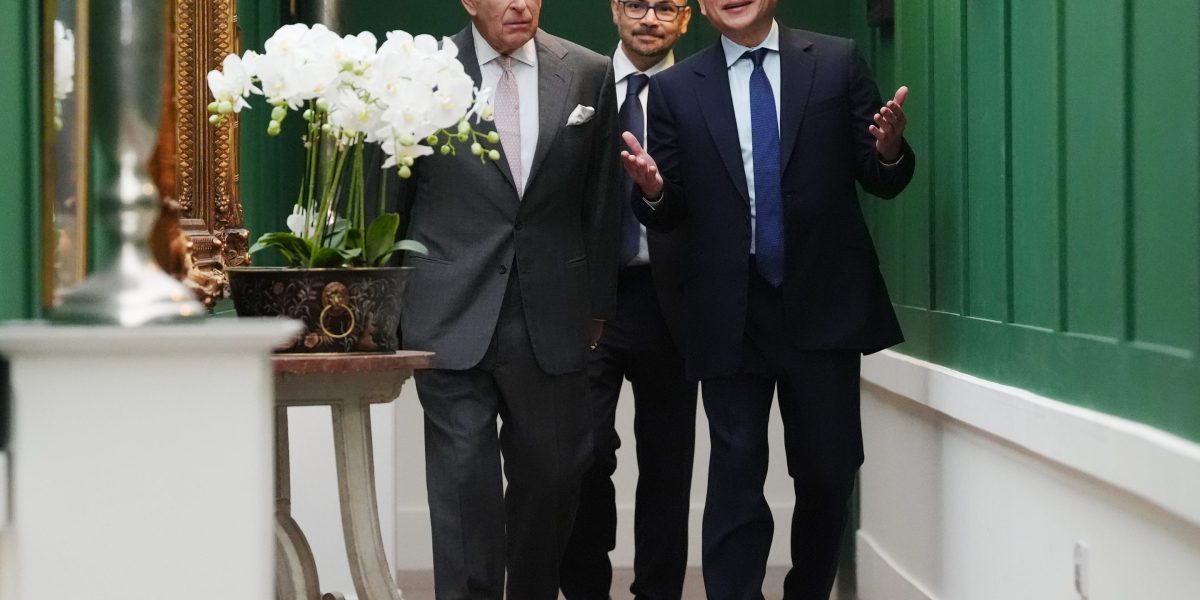
At Dumfries House in Ayrshire, King Charles III told executives from OpenAI, Anthropic, Google DeepMind and Nvidia that 'we need sufficient means of control before it is all too late,' calling AI's substance and pace 'intriguing and deeply concerning in equal measure.' Nvidia CEO Jensen Huang, DeepMind chair Demis Hassabis, OpenAI CFO Sarah Friar and UK AI minister Kanishka Narayan were in the room. Huang used his own remarks immediately after to push back, arguing safe deployment is each company's responsibility rather than something a coordinated pause should handle. The split is the whole story: the king asked for international cooperation and consensus, and the most powerful person present declined it on stage.
.png)