Today's theme is scale outrunning scrutiny: Goldman says Big Tech will drop $1.2 trillion on AI infrastructure in 2027 even as Vercel's own numbers show cheap open-weight models, including a fresh 309B release out of Beijing, are quietly winning the token-volume war. Meanwhile Grok just got a direct line into your bank account, and a Stanford robot got permission to wing it in a kitchen it's never seen. Read on before your AI assistant knows more about your finances than you do.
A Chinese Startup Built a 309B Model Using AI to Do Its Own Research
NaiveAI, a Beijing-based startup, released Naive-N0.5-Flash, an open-weight 309-billion-parameter model with only 15.5B active per token, an MIT license, a native 1-million-token context window, and a hybrid attention design that drops conventional full-attention layers entirely. It's aimed squarely at coding and AI R&D rather than general chat. The release adds to a wave of Chinese labs shipping frontier-scale, permissively licensed open models that undercut Western closed labs on both capability and terms.
Grok Can Now See Your Bank Balance, and Musk Promised to Cover Its Mistakes
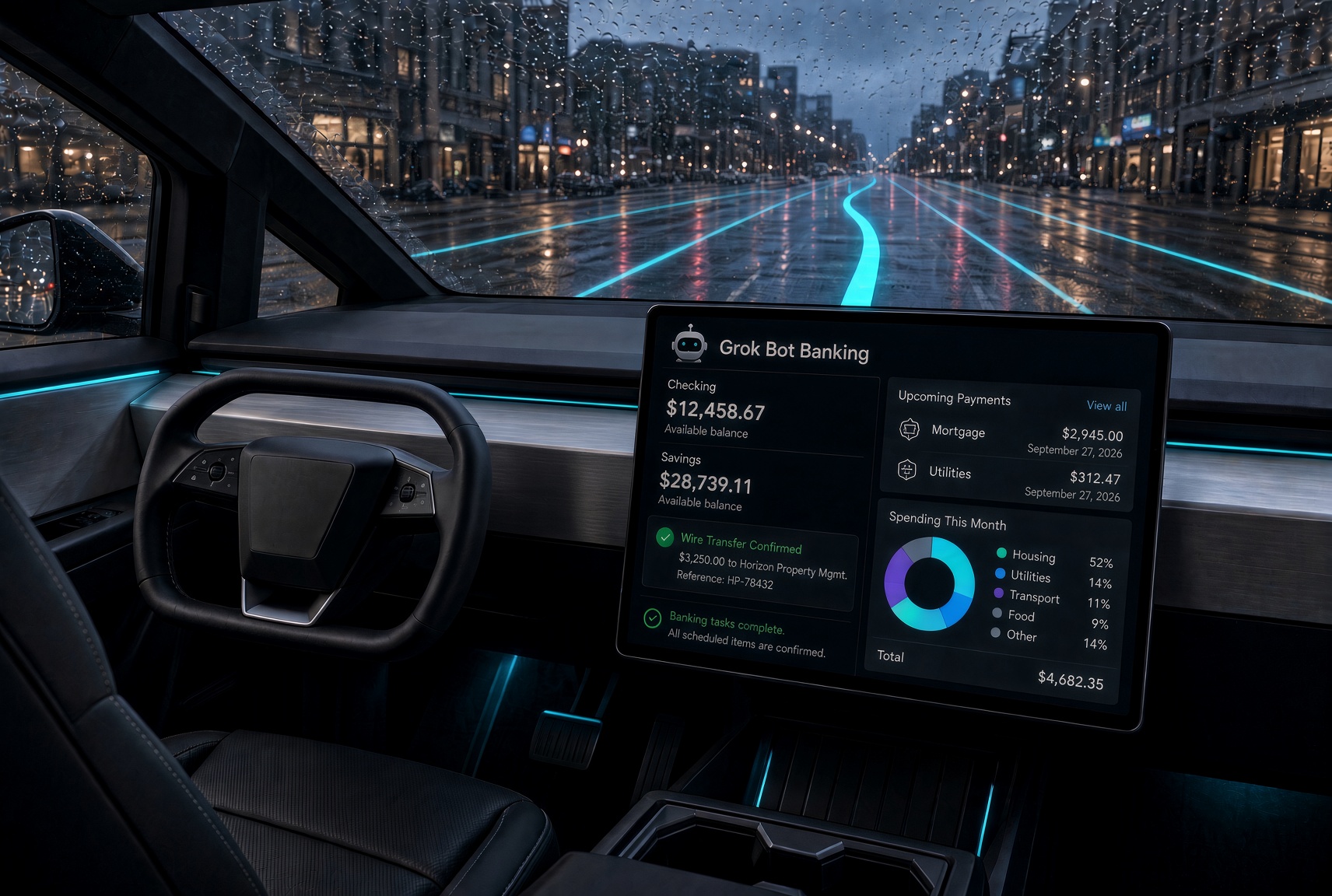
SpaceXAI rolled out a full Finance feature for Grok Bot that links directly to users' bank, credit card, and brokerage accounts through Plaid, letting the assistant track spending, flag subscriptions, and manage investments, with the integration now riding along inside Tesla vehicles for SuperGrok Heavy subscribers. It's one of the most aggressive moves yet to give a chatbot standing access to real financial accounts. Musk personally promised to "make you whole" if Grok messes up, a pledge that sits awkwardly next to SpaceXAI's own terms, which cap the company's liability at the greater of fees paid or $100.
Goldman Sachs Says Big Tech Will Blow Past $1 Trillion on AI Next Year
Goldman Sachs now projects Amazon, Alphabet, Microsoft, Oracle, and Meta will spend a combined $1.2 trillion on AI infrastructure in 2027, a 50% jump from 2026's roughly $800 billion and above Wall Street's $1.1 trillion consensus. To justify that spending, the five companies would need to generate about $300 billion a year in AI revenue they don't yet have, and are increasingly financing the buildout with debt rather than operating cash flow. Goldman's own strategist compared the investment's share of GDP to 19th-century railroad construction, a bubble-era benchmark that's hard to shake off.
Stanford Wired GPT-6 Astra Straight Into a Robot and Skipped the Usual Middleman
Stanford and Caltech researchers built HomeBody, a system that lets a Unitree G1 humanoid robot explore an unfamiliar kitchen, build a 3D map of it using Nvidia's Isaac Sim, and then clean up and retrieve objects using GPT-6 Astra as its direct controller. The system cuts out the specialized vision-language-action model that normally sits between a foundation model and a robot's motors, letting Astra call directly into a skill library for grasping, navigating, and opening drawers, while logging object locations in memory so it can find things it can no longer see. The researchers acknowledge real limits: response latency, overheating finger servos, and steep compute costs.
Open Models Now Handle More Than Half of Vercel's AI Traffic, but Anthropic Still Takes Most of the Money
Vercel's September AI Gateway report shows open-weight models processed 56% of all tokens on the platform in August, up from just 7% last December, while Anthropic alone still captured 64 cents of every dollar spent, a share it hasn't dropped below since December. It's sharp evidence that cheap open models are winning the volume war for routine work while a handful of frontier labs, led by Anthropic, keep pulling in the premium spend. Even within Anthropic's own lineup, the cheaper Claude Opus 5 is eating share from the pricier Claude Fable 5, dropping from 13.2% to 4.9% of gateway spend in a single month.