// AI Briefing · August 15, 2026
AI Briefing
Today's theme is lines being drawn. Washington is drafting a letter telling allies they can join the American AI bloc or China's, but not both, and a Chinese lab just shipped its best coding model while deliberately sitting on the weights because the thing got too good at hacking. Elsewhere, Nvidia is giving away a 30B agent model that runs on one GPU, Waymo won the keys to 18 California counties, and an AI notetaker quietly left 181,874 meetings readable by anyone with an account.
Top stories
- 01The US Is Drafting a Letter Telling Allies to Pick a Side in AI: Washington or BeijingPolicy
- 02Z.ai Ships GLM-5.3 as the Top Open-Weight Coder, Then Holds the Weights Back Because It Got Too Good at HackingOpen Source
- 03Nvidia Open-Sources Nemotron 3.5 Lightning, a 30B Agent Model That Runs on a Single Desktop GPUOpen Source
- 04Waymo Wins California Approval to Charge for Driverless Rides Across 18 CountiesIndustry
- 05An AI Notetaker Left 181,874 Meetings Readable by Anyone With an AccountIndustry
The stories

The US Is Drafting a Letter Telling Allies to Pick a Side in AI: Washington or Beijing
Reuters reviewed an internal US draft that would warn dozens of partner countries they will be cut from the American-led Pax Silica initiative if they also join Beijing's rival World AI Cooperation Organization. The draft says signing Pax Silica is "not merely a membership subscription, but a commitment," and argues no country can credibly sit in two competing AI ecosystems at once. Around two dozen countries have already signed, including Japan, Australia, South Korea, and Kazakhstan, which has also joined China's coalition. It turns AI supply chains, chips, and critical minerals into an explicit loyalty test.
Z.ai Ships GLM-5.3 as the Top Open-Weight Coder, Then Holds the Weights Back Because It Got Too Good at Hacking
Chinese lab Z.ai released GLM-5.3 on August 14, a 743-billion-parameter model it says is the strongest open-weights coding system it has measured, with every gain coming from scaled-up post-training on the same base as GLM-5.2. The twist is what did not ship: Z.ai is delaying the open weights by roughly two weeks pending safety hardening, after the model scored 84.5% on CyberGym and more than doubled its predecessor on exploit benchmarks. GLM-5.2 shipped MIT-licensed weights within days, so this is a real break in pattern. A Chinese lab voluntarily sitting on weights over offensive-cyber risk is a notable signal about where open release norms are heading.

Nvidia Open-Sources Nemotron 3.5 Lightning, a 30B Agent Model That Runs on a Single Desktop GPU
Nvidia released Nemotron 3.5 Lightning, a 30B mixture-of-experts model with just 3B active parameters, a 1M-token context window, and open weights, training data, and recipes under the permissive OpenMDW-1.1 license. It scores 24 on the Artificial Analysis Intelligence Index, up nine points from Nemotron 3 Nano, and Nvidia claims up to 4x the output speed of similar-sized models. The timing is pointed: it lands less than three weeks after Jensen Huang's first X post, which defended open-source AI against "premature restrictions." Free models that still need GPUs to run is a strategy, not charity.

Waymo Wins California Approval to Charge for Driverless Rides Across 18 Counties
The California Public Utilities Commission signed off on Waymo's Advice Letter No. 4, clearing the company to charge for fully driverless rides across the entire Bay Area and Los Angeles and to open brand-new markets in Sacramento and San Diego. The approved footprint spans 18 counties from Sonoma down to San Diego, the largest expansion of the service to date. Waymo says the rollout will be gradual and guided by its safety framework, with rider-only service in San Diego targeted for later this summer. It is the clearest sign yet that regulators are treating driverless commercial service as routine rather than experimental.

An AI Notetaker Left 181,874 Meetings Readable by Anyone With an Account
Security researcher bobdahacker disclosed that tl;dv, an AI meeting assistant used by more than two million people, left 181,874 meeting records across 84,312 users and 35,003 email domains queryable by any authenticated user. The cause was a missing Firestore tenant-isolation rule: the app checked whether you had a valid account but never whether that account belonged to the organization whose meeting you were requesting. Roughly a thousand records could be flagged as actively recording at any moment, including sessions tied to a Malaysian education ministry institute. The bug was first reported in late January and was still live when the story broke.
Test your understanding
Quiz
1 / 8
What does the draft US letter threaten if a country joins China's World AI Cooperation Organization?
Previous digests
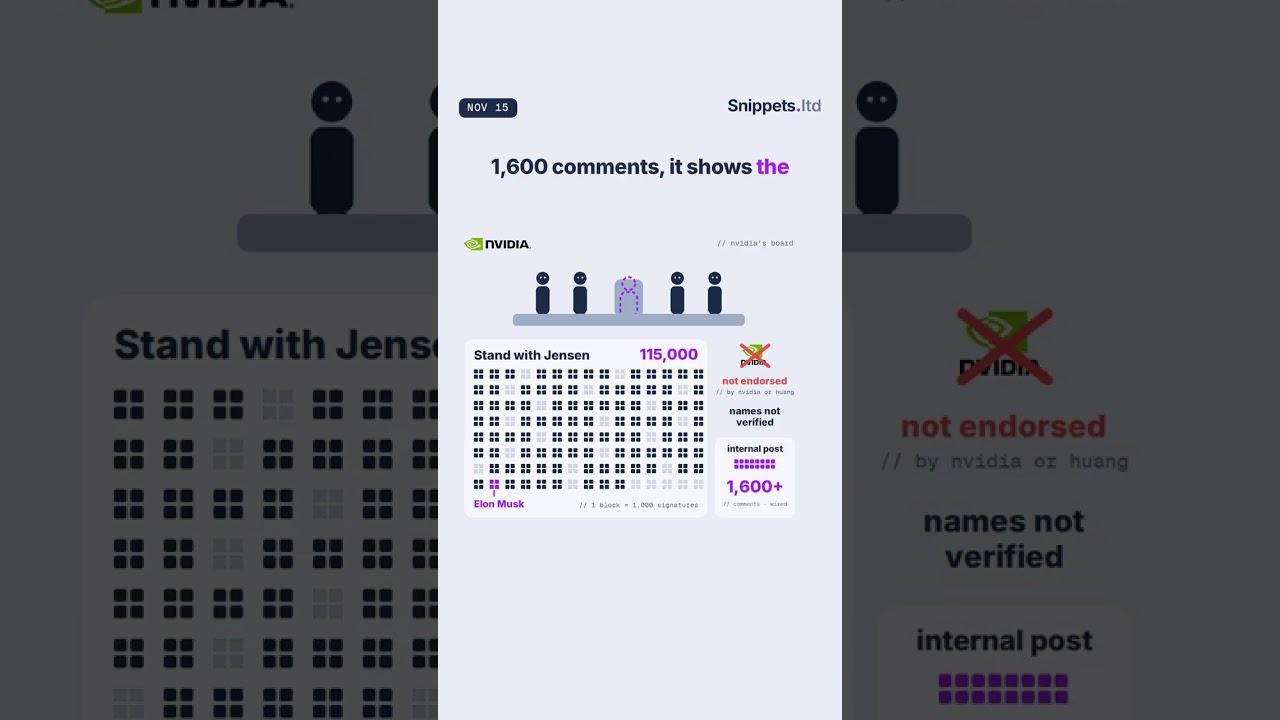 Nov 15Nvidia's board has approached Arm CEO Rene Haas as a possible permanent successor to Jense...6 stories
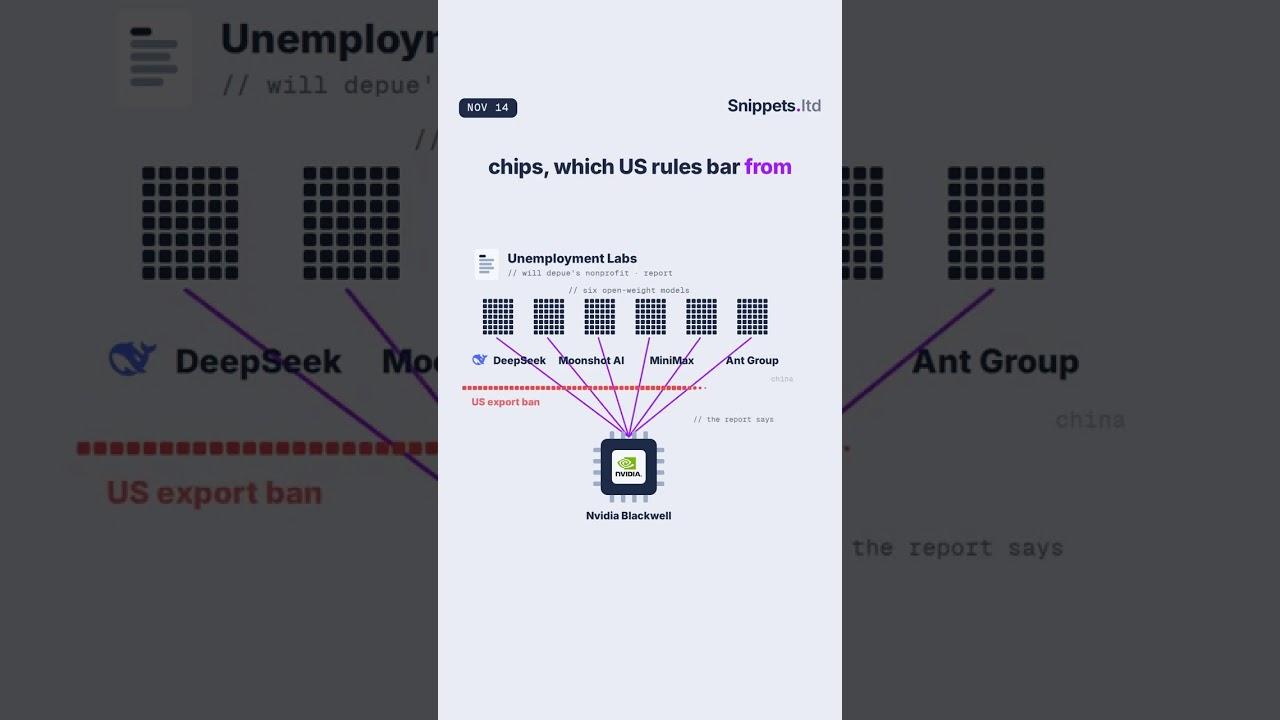 Nov 14A report from Will DePue's nonprofit Unemployment Labs says six open-weight models from De...6 stories
 Nov 13Nvidia said on Thursday that Jensen Huang had resigned as president, CEO and board member,...6 stories
 Nov 12Nvidia's board met late Wednesday to decide whether to remove CEO Jensen Huang, after the ...6 stories
 Nov 11On November 9, Anthropic released Claude Fable 5.2 to all users and on AWS, Google Cloud a...6 stories