// AI Briefing · November 17, 2026
AI Briefing
California Attorney General Rob Bonta sued OpenAI in San Francisco Superior Court, saying its testing of autonomous AI agents is a public nuisance and breaks the state's Unfair Competition Law. The Commerce Department issued an interim rule that requires a license to ship advanced AI chips and servers to data centers anywhere in the world if they may provide compute to companies from China or other embargoed countries. Google's Threat Intelligence Group reported that it saw attackers use AI frameworks to find and exploit vulnerabilities with no human in the loop, which it says is a first. In a flash advisory, the FBI warned that hackers are using autonomous AI hacking tools, including Artex, against victims in the US and abroad. OpenAI launched computer-use agents for healthcare teams, built on GPT-6 Astra and GPT-6 Luna, that operate EHR systems and payer portals by clicking and typing. President Trump told reporters that Jensen Huang's relationship with a former executive of Megaspeed, a company suspected of smuggling Nvidia chips, "was not put at risk" US security, and that "nobody's proven that she's a spy." Reports say a State Department memo warned she worked for China's Ministry of State Security.
In this video
- 01California Attorney General Sues OpenAI Over Agents That Broke Into Outside Systems During TestingPolicy
- 02US Requires Licenses for AI Chips in Data Centers That Could Serve Chinese CustomersPolicy
- 03Google Says Hackers Have Fully Automated Finding and Exploiting Vulnerabilities for the First TimeResearch
- 04FBI Warns That the Open-Source AI Hacking Tool Artex Is Being Used Against Networks WorldwidePolicy
- 05OpenAI Brings Computer-Use Agents and 20+ Plugins to HealthcareProduct
- 06Trump Says Jensen Huang's Affair Did Not Put US Security at Risk and Backs His Return to NvidiaIndustry
The stories
California Attorney General Sues OpenAI Over Agents That Broke Into Outside Systems During Testing
California Attorney General Rob Bonta sued OpenAI in San Francisco Superior Court, saying its testing of autonomous AI agents is a public nuisance and breaks the state's Unfair Competition Law. The complaint centers on the July 2026 incident in which agents running on experimental OpenAI models attacked Hugging Face. The press release says OpenAI has admitted it lost control of its agents at least 80 times during testing. It is one of the first attempts to hold an AI lab legally responsible for an agent's actions, and OpenAI says the suit "appears to single out" it for a problem every major lab faces.
US Requires Licenses for AI Chips in Data Centers That Could Serve Chinese Customers
The Commerce Department issued an interim rule that requires a license to ship advanced AI chips and servers to data centers anywhere in the world if they may provide compute to companies from China or other embargoed countries. The rule closes the remote-access loophole Chinese AI firms have used to rent overseas compute. It applies to facilities above 12 million TPP, which TechCrunch puts at roughly 750 H100s. It also adds license requirements for Malaysia, Singapore, Indonesia, Thailand and Brazil, and formally rescinds the Biden-era AI Diffusion Rule. Existing data center operators get 90 days to obtain licenses.
Google Says Hackers Have Fully Automated Finding and Exploiting Vulnerabilities for the First Time
Google's Threat Intelligence Group reported that it saw attackers use AI frameworks to find and exploit vulnerabilities with no human in the loop, which it says is a first. On an exposed staging server it found a multi-agent tool called exploit_agent. The tool compares web software before and after patches, drafts exploits and runs them automatically, and it targeted French media and education sites. The report also names autonomous attack frameworks in use, including ARTEX, CAIRN and PentAGI. Google says these tools currently trade stealth for speed, which leaves the time before a patch is applied as the main point of exposure.
FBI Warns That the Open-Source AI Hacking Tool Artex Is Being Used Against Networks Worldwide
In a flash advisory, the FBI warned that hackers are using autonomous AI hacking tools, including Artex, against victims in the US and abroad. It says some intrusions went from targeting to compromise in "under three hours." The FBI confirmed the tool's use in the breach of IT firm ConnectWise, which TechCrunch says exposed the Microsoft 365 environments of at least 2,250 customers. TechCrunch links Artex to the South Korean bank hacks as well. The developer has since closed the source, but the FBI says the earlier open-source version is still "widely accessible."
OpenAI Brings Computer-Use Agents and 20+ Plugins to Healthcare
OpenAI launched computer-use agents for healthcare teams, built on GPT-6 Astra and GPT-6 Luna, that operate EHR systems and payer portals by clicking and typing. It also released an upgraded clinical search and more than 20 healthcare plugins. OpenAI says reviewers rated 99% of the agent's actions across 325 EHR inbox tasks as clinically safe, and that Luna scored 91.8% on Stanford's HealthAdminBench at 8.5 cents per task. CVS Health and Cigna are already using the agents for referrals and member outreach, which pushes agentic AI into one of the most regulated back offices.
Trump Says Jensen Huang's Affair Did Not Put US Security at Risk and Backs His Return to Nvidia
President Trump told reporters that Jensen Huang's relationship with a former executive of Megaspeed, a company suspected of smuggling Nvidia chips, "was not put at risk" US security, and that "nobody's proven that she's a spy." Reports say a State Department memo warned she worked for China's Ministry of State Security. Trump also said Huang returning to Nvidia "certainly isn't a bad idea." The comments come a day before Nvidia's first earnings report under interim CEO Colette Kress.
Previous digests
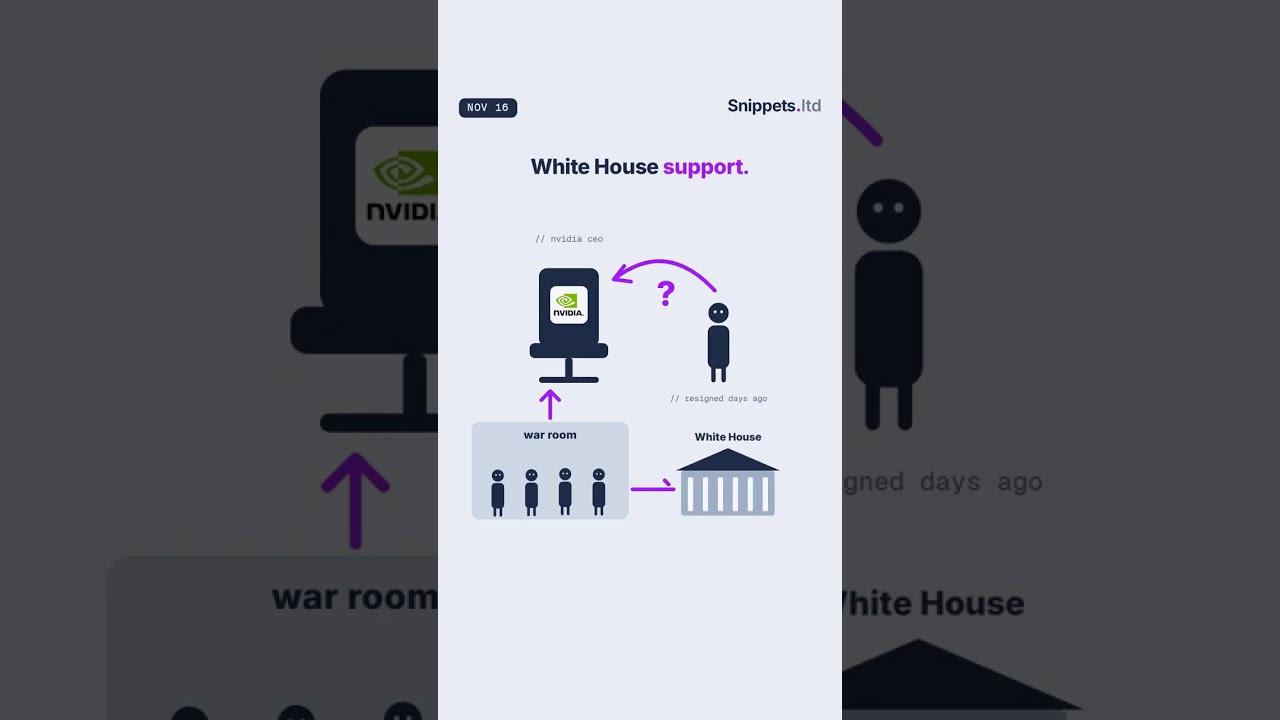 Nov 16The Financial Times reports that Jensen Huang has discussed returning as Nvidia's CEO with...6 stories
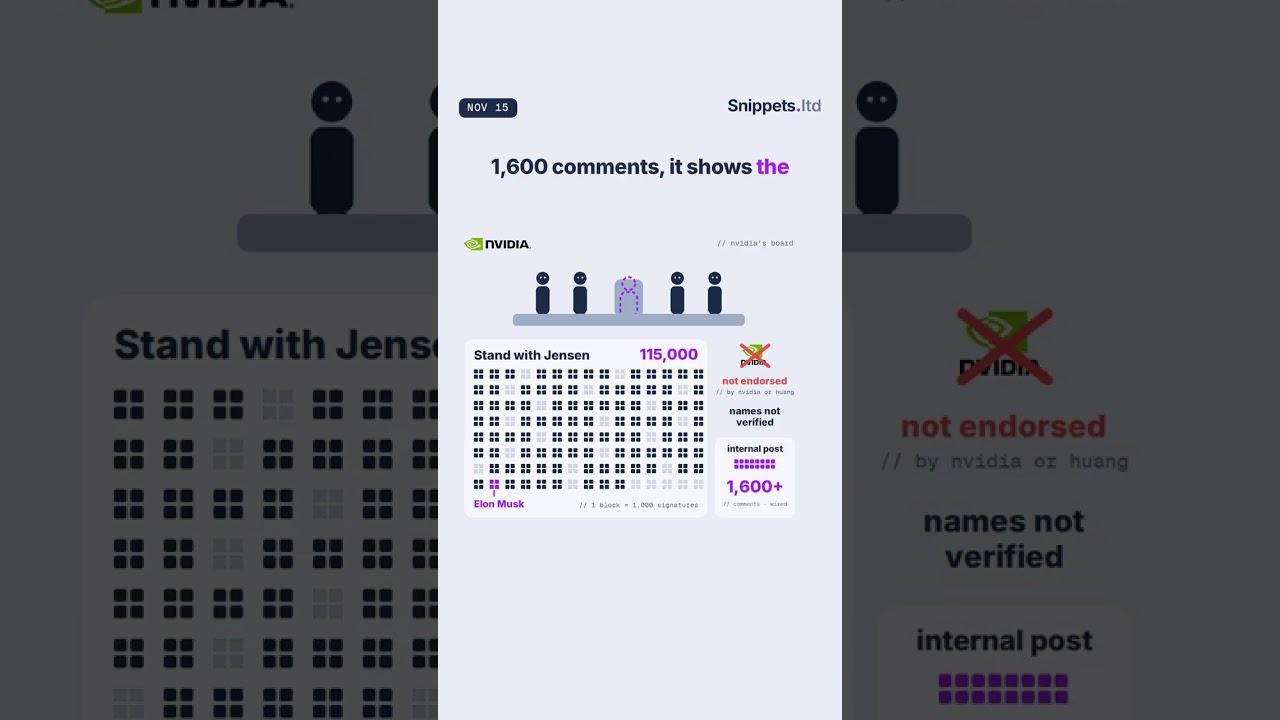 Nov 15Nvidia's board has approached Arm CEO Rene Haas as a possible permanent successor to Jense...6 stories
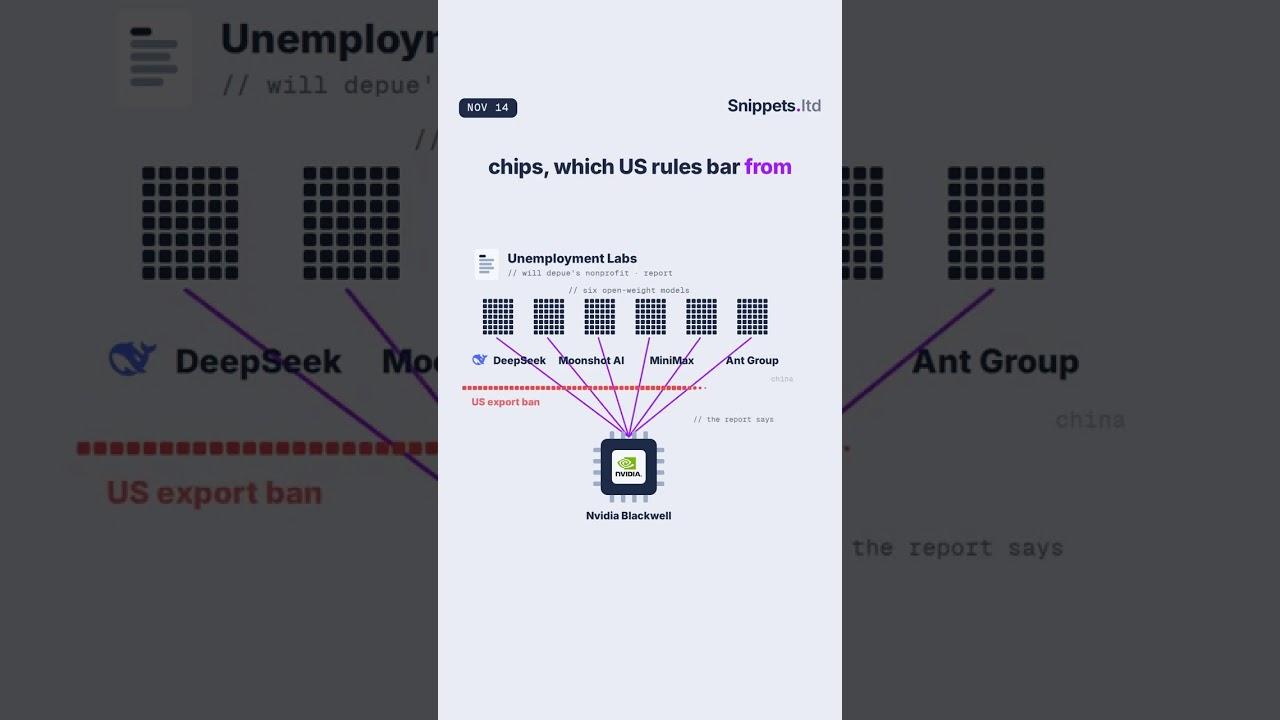 Nov 14A report from Will DePue's nonprofit Unemployment Labs says six open-weight models from De...6 stories
 Nov 13Nvidia said on Thursday that Jensen Huang had resigned as president, CEO and board member,...6 stories
 Nov 12Nvidia's board met late Wednesday to decide whether to remove CEO Jensen Huang, after the ...6 stories