// AI Briefing · November 7, 2026
AI Briefing
Physical Superintelligence (PSI) says its internal research system, running instances of a non-public Anthropic model, produced a complete proof of the Aaronson-Ambainis conjecture, a quantum computing problem open since 2008, and the Lean proof assistant accepted it. In an outside assessment, METR estimates that as of October 2026 Anthropic was improving its models' capabilities at about twice its March 2024 to October 2025 rate. Bloomberg reports that OpenAI has raised about $11 billion of a still-open funding round at a $1.25 trillion valuation, and a source says the round could reach about $20 billion. Mira Murati's Thinking Machines introduced Inkling 2 Small, a mixture-of-experts model with 594 billion total and 17 billion active parameters that accepts images and offers variable effort levels. Check Point Research says criminals ran largely autonomous campaigns with ARTEX, a Chinese open-source AI penetration-testing platform, mostly on DeepSeek models. The Bank of England's November Monetary Policy Report estimates AI has raised UK productivity by about 0.5% over the past three years, or roughly 0.1 to 0.2 percentage points a year.
In this video
- 01PSI Says Its AI System, Running a Non-Public Anthropic Model, Proved the 18-Year-Old Aaronson-Ambainis ConjectureResearch
- 02METR Estimates Anthropic's Capability Gains Have Roughly Doubled in Pace, With About 80% of the Speedup From AIResearch
- 03OpenAI Reportedly Raises $11B at a $1.25 Trillion Valuation, Short of Its Original TargetFunding
- 04Thinking Machines Unveils Inkling 2 Small, a 594B-Parameter Model It Plans to Release Under Apache 2.0Open Source
- 05Check Point: Criminals Used the ARTEX AI Hacking Platform to Run Nearly Autonomous Attack Campaigns for a Few Hundred DollarsIndustry
- 06Bank of England Estimates AI Has Raised UK Productivity by Only About 0.5% Over Three YearsPolicy
The stories
PSI Says Its AI System, Running a Non-Public Anthropic Model, Proved the 18-Year-Old Aaronson-Ambainis Conjecture
Physical Superintelligence (PSI) says its internal research system, running instances of a non-public Anthropic model, produced a complete proof of the Aaronson-Ambainis conjecture, a quantum computing problem open since 2008, and the Lean proof assistant accepted it. The conjecture limits how much quantum computers can speed up yes-or-no questions on random inputs, so a proof would settle a central open question in quantum query complexity. Stanford researchers who read the proof called it "a huge result" and are writing an expert exposition. It is the strongest claim yet of AI settling a famous open problem in research math.
METR Estimates Anthropic's Capability Gains Have Roughly Doubled in Pace, With About 80% of the Speedup From AI
In an outside assessment, METR estimates that as of October 2026 Anthropic was improving its models' capabilities at about twice its March 2024 to October 2025 rate. It also guesses that roughly 80% of that acceleration comes from AI tools themselves. On Anthropic's internal version of the Epoch Capabilities Index, the trend grew 1.9x faster (95% CI 1.5–2.8x). This is one of the first independent checks of AI speeding up AI research at a frontier lab. METR warns that Anthropic redacted most of the evidence METR found most informative, and that it had no query access to unreleased models.
OpenAI Reportedly Raises $11B at a $1.25 Trillion Valuation, Short of Its Original Target
Bloomberg reports that OpenAI has raised about $11 billion of a still-open funding round at a $1.25 trillion valuation, and a source says the round could reach about $20 billion. In September, OpenAI was reported to be seeking $30 billion at $1.4 trillion. A smaller round at a lower valuation suggests investors are pushing back on AI prices after this week's chip-stock rout.
Thinking Machines Unveils Inkling 2 Small, a 594B-Parameter Model It Plans to Release Under Apache 2.0
Mira Murati's Thinking Machines introduced Inkling 2 Small, a mixture-of-experts model with 594 billion total and 17 billion active parameters that accepts images and offers variable effort levels. It is available now through the company's Tinker platform with closed weights. The company plans to release full weights under Apache 2.0 next week, once external safety testing and red-teaming are complete. The company reports 86.3% on SWE-Bench Pro (Hard), and the release would be a major new open-weight entry from a well-funded US lab, though the company says it trails closed models such as GPT-6.1 Sol on alignment evaluations.
Check Point: Criminals Used the ARTEX AI Hacking Platform to Run Nearly Autonomous Attack Campaigns for a Few Hundred Dollars
Check Point Research says criminals ran largely autonomous campaigns with ARTEX, a Chinese open-source AI penetration-testing platform, mostly on DeepSeek models. In one campaign, from October 14 to 29, AI agents obtained over 300 Apple code-signing certificates and passwords from gray-market signing shops, three of which passed validation. Check Point estimates that campaign's model costs at $700 to $1,500. A separate campaign recovered over 190,000 game-account credentials, while an attempt to drain crypto funds moved no money. Separately, TechCrunch reports that hundreds of ARTEX deployments were exposed on the open internet, showing how cheap agentic hacking is spreading beyond skilled attackers.
Bank of England Estimates AI Has Raised UK Productivity by Only About 0.5% Over Three Years
The Bank of England's November Monetary Policy Report estimates AI has raised UK productivity by about 0.5% over the past three years, or roughly 0.1 to 0.2 percentage points a year. AI-related activity made up just under a fifth of UK GDP growth since the start of 2026, but mostly from companies building and deploying AI, not from firms using it. Firms report virtually no overall effect on jobs so far, but some are less inclined to hire or to replace staff who leave. It is a sober central-bank view of AI's payoff as markets question AI spending.
Previous digests
 Nov 6The Nasdaq fell 5.5% on November 5, its worst day since April 2025, and the Philadelphia S...4 stories
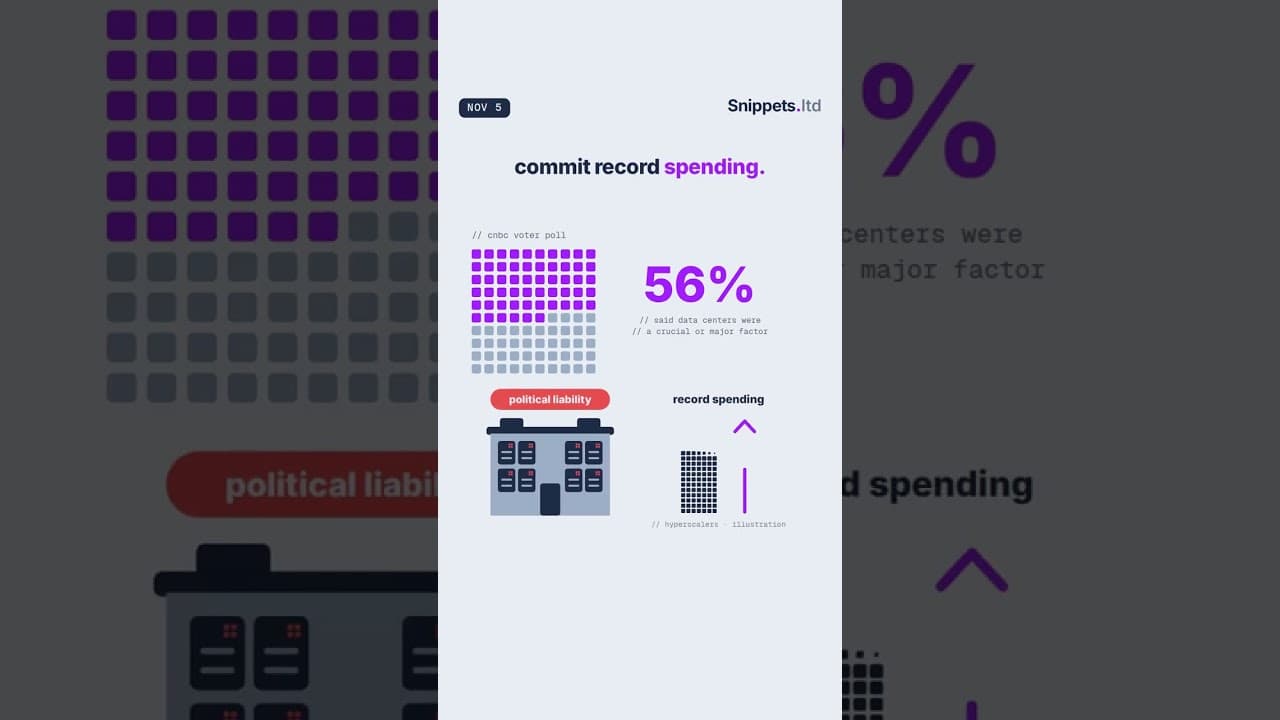 Nov 5OpenAI says an autonomous pipeline of agents, running an unreleased "upcoming cyber model,...6 stories
 Nov 4China's state economic planner, the NDRC, said on Nov. Binance's incident report says atta...6 stories
 Nov 3Anthropic's amended S-1, filed November 2, says internal estimates indicate it "may immine...6 stories
 Nov 2Axios reports that OpenAI is preparing a policy and PR campaign for after Tuesday's US mid...6 stories