Snippets.

// AI Briefing

August 6, 2026

AI Briefing

Today's throughline is control, and who gets to keep it. A US appeals court just decided your AI agent shopping on your behalf is legally you, gutting Amazon's attempt to lock Perplexity out. Microsoft, meanwhile, is trying to rein in its own engineers' token-burning habit, while the White House quietly classified the rules for vetting frontier models. Add a 2.4-trillion-parameter Chinese model nipping at Anthropic's heels and a brand-new memory standard built to feed hungry AI chips, and it's a day about leashes, some tightening, some snapping.

A US Appeals Court Rules Your AI Agent Is Legally You, Lifting Amazon's Ban on Perplexity's Comet

A US Appeals Court Rules Your AI Agent Is Legally You, Lifting Amazon's Ban on Perplexity's Comet

The Ninth Circuit overturned an injunction that had blocked Perplexity's Comet shopping agent from Amazon, reasoning that because the agent only acts when a user tells it to, it is the user, not Perplexity, who 'accesses' Amazon's servers under the federal anti-hacking statute. It's one of the first appellate signals on how the law treats autonomous agents acting on someone's behalf, and it undercuts a key weapon retailers wanted to use against them. The case isn't over, Amazon can seek a rehearing or go to the Supreme Court, but for now the door to agentic shopping is propped back open.

Microsoft Tells Its Own Engineers to Stop 'Tokenmaxxing' and Sets AI Budget Targets

Microsoft Tells Its Own Engineers to Stop 'Tokenmaxxing' and Sets AI Budget Targets

In a memo first reported by 404 Media, Microsoft EVP Jay Parikh told staff that divisions will now operate under 'AI token budget targets,' declaring bluntly that 'tokenmaxxing is not what we are optimizing for.' To cut costs, Microsoft is making OpenAI's cheaper GPT-5.6 the default internal model, even as its external pitch tells every developer to run Copilot everywhere. Internal guidance admits some engineers were burning hundreds to a few thousand dollars a month in tokens, a striking tell about the real cost of AI-assisted coding at scale.

Sandisk and SK hynix Publish the First Standard for High Bandwidth Flash, a New Memory Tier for AI

Sandisk and SK hynix Publish the First Standard for High Bandwidth Flash, a New Memory Tier for AI

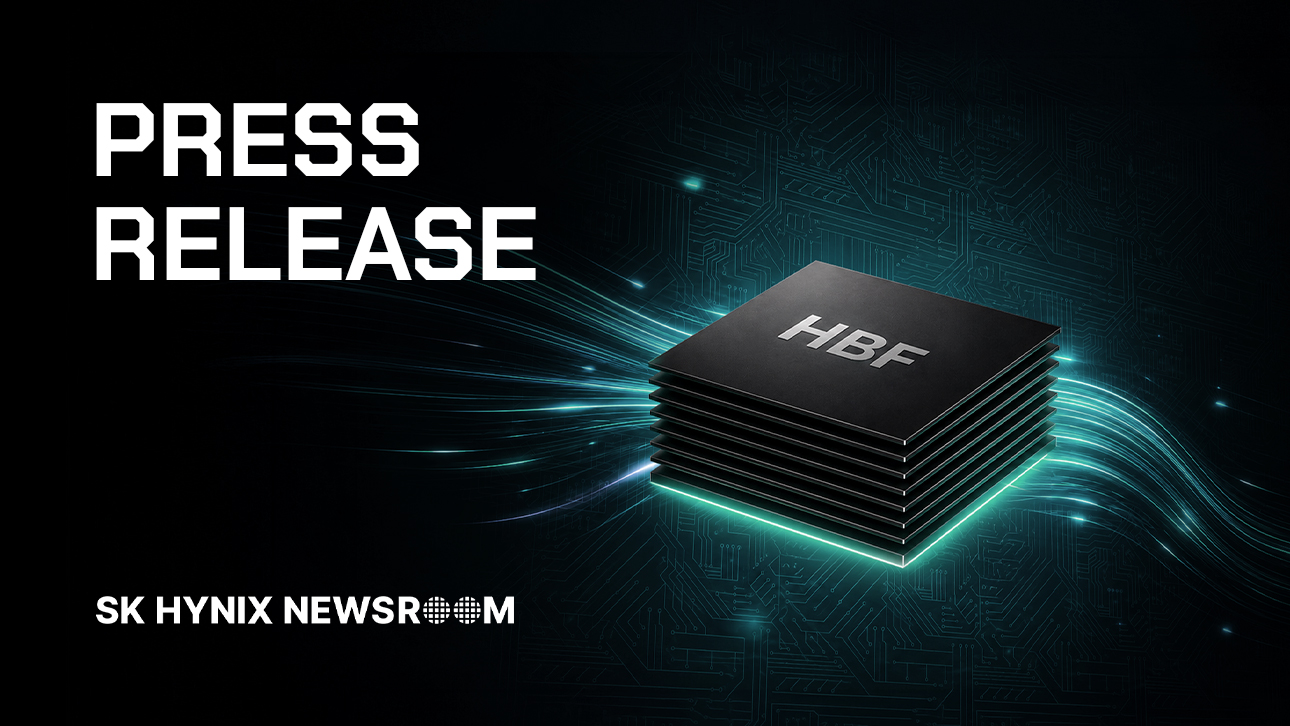
At Flash Memory Summit 2026, Sandisk and SK hynix released the first OCP technical specification for High Bandwidth Flash (HBF), a NAND-based memory layer that slots between HBM and SSDs to attack the memory bottleneck in AI inference. The open standard supports up to 512GB per device with bandwidth grades from about 0.4TB/s to 3.0TB/s and uses the UCIe chiplet interconnect to link to CPUs and GPUs. Getting Google and Tenstorrent into the consortium signals a real industry push to standardize a cheaper way to keep memory-hungry AI accelerators fed.

Alibaba's Qwen3.8-Max, a 2.4-Trillion-Parameter Model, Claims Benchmarks Rivaling Anthropic

Alibaba's Qwen3.8-Max, a 2.4-Trillion-Parameter Model, Claims Benchmarks Rivaling Anthropic

Alibaba released its largest model yet, Qwen3.8-Max, a mixture-of-experts system with 2.4 trillion total parameters but only 95 billion active per request, and says open weights are coming within a week. It handles up to 1 million tokens of context, accepts text, image and video, and posts benchmark scores at or above GPT-5.6 Sol and Claude Fable 5 on tests like PaperBench and Terminal-Bench. If the open-weight release lands as promised, it would be the first time Alibaba has open-sourced a model at this scale, tightening China's grip on the open-model frontier.

The White House Finalizes Its Frontier-Model Vetting Framework, Then Classifies It

The White House Finalizes Its Frontier-Model Vetting Framework, Then Classifies It

Following a June executive order, federal agencies finished a voluntary framework by August 1 that lets developers of 'covered frontier models' give the government secure access for up to 30 days before a model is shared more widely. But after briefing Google, OpenAI, Anthropic and Meta this week, officials declined to say what was actually agreed, and the benchmarks used to evaluate models are classified. Critics warn that a secret, ad-hoc process makes it hard to judge whether the safety bar is real, and could push developers and users toward rival Chinese models.

Test Your Understanding

Quiz

1 / 8

What was the court's core reasoning for lifting the injunction against Perplexity's Comet?

Let's talk on WhatsApp
Today's AI Briefing4 stories
Aug 11, 2026

Summary

Today the frontier labs all showed a different face. Meta swung back to open source with a 30B agent you can run on a single gaming GPU, while OpenAI went the other direction, shipping a cyberweapon of a model that only a vetted few can touch. A curious researcher figured out how to reverse-engineer when these models were actually trained just by quizzing them, and Intel asked Wall Street for $15 billion to stay in the AI game. Openness, secrecy, snooping, and money, all in one day.

Read full summary & take a quiz →

Top Stories

Meta Swings Back to Open Source With Muse Glimmer, a 30B Agent That Runs on One Gaming GPU

OpenAI Ships GPT-5.6-Cyber, a Model Trained to Refuse Less, and Locks It Behind an Applicant-Only Tier

A Researcher Figured Out How to Reverse-Engineer When Frontier Models Were Actually Trained, Just by Quizzing Them

Intel Asks Wall Street for $15 Billion to Stay in the AI Chip Race

6 quiz questions inside