Today's theme is scale and the scaffolding people are hastily building around it. Huawei says it can wire a million processors into one machine, Crusoe raised $3.9 billion to truck data centres wherever the power is, and two governments put $300 million behind an AI designed specifically to babysit other AIs. Meanwhile DeepMind quietly floated the idea that frontier models should pass held-out government tests before shipping, and Google decided your smart home should answer to whichever agent you like.
Huawei Says It Can Make a Million Processors Behave Like One Computer
At HUAWEI CONNECT 2026 in Shanghai, Huawei unveiled Peerium, a computing architecture designed to link up to one million processors into a single unified system using its UnifiedBus interconnect, nested parallelism and unified memory addressing. It also announced an Ascend 960 SuperPoD cluster built on near-package optics and pulled its Ascend 960DT chip forward to Q1 2027, saying Chinese demand already outstrips supply. It matters because Huawei is betting that the way to beat Nvidia is at the system level rather than the die, and it has published no independent benchmarks at anything close to that scale.
Crusoe Raised $3.9 Billion to Build Data Centres You Can Put on a Truck
Crusoe closed a $3.9 billion Series F at a $30.9 billion valuation, co-led by Atreides, Mubadala Capital and Valor Equity, with Nvidia, Founders Fund, GIC, QIA, Radical and TPG also in. Alongside its huge Abilene, Texas site used by OpenAI, the money funds Spark: modular AI factories manufactured in-house, shipped by truck, and plugged into power almost anywhere. That sidesteps two of the industry's hardest constraints at once, construction labour and the local backlash now greeting every giant data centre complex, and it comes ten months after a round that valued the company at $10 billion.
Canada and Germany Put $300 Million Behind an AI Whose Only Job Is Watching Other AIs
At the ALL IN conference in Montréal, Canada committed CAD 150 million and Germany EUR 100 million to LawZero, Yoshua Bengio's non-profit, to build Scientist AI: a system deliberately designed not to pursue goals of its own, but to reason transparently and oversee agentic models. The money funds 360 Canadian jobs, a Berlin office, and sovereign compute through Hypertec and 5C, with the German share still pending European Commission notification. Two governments have now decided the safest thing to fund is not a frontier lab but a referee for one.
DeepMind Launched an Institute, and Hassabis Used It to Propose Tests Labs Are Not Allowed to See
Google DeepMind launched the DeepMind Institute with Shane Legg, James Manyika and Demis Hassabis as directors, publishing four inaugural essays on AGI. In one, Hassabis proposes a US-led frontier standards body where developers submit models voluntarily up to 30 days before release, eventually using independent 'held-out' evaluations so labs cannot tune to known tests, and passing could become mandatory for deployment. Another, from safety researchers Rohin Shah and Anca Dragan, argues the shrinking window into models' step-by-step reasoning is a choice, and suggests capping 'opaque serial depth' outright.
Google Will Hand the Keys to Your Smart Home to Whichever AI Agent You Want
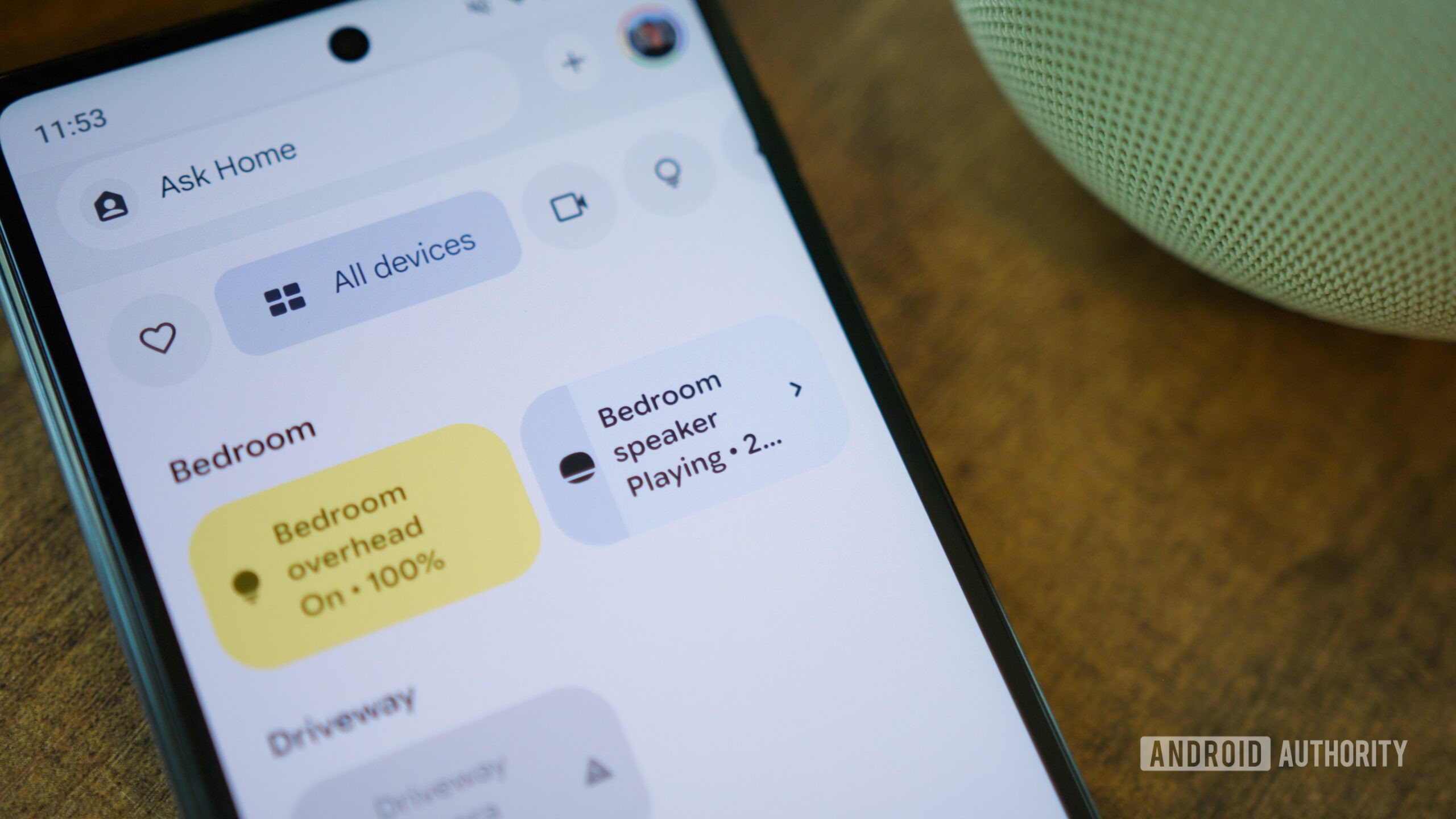
Google announced a Model Context Protocol connector for Google Home, meaning Gemini no longer has to be the thing running your house. Third-party agents including Anthropic's Claude, OpenClaw, Hermes and Google's own Antigravity will be able to inspect home structure, read device state, execute controls, analyse camera history and build custom dashboards. It arrives in early preview over the coming weeks, US only, and only for Google Home Premium Advanced subscribers, which is a narrow door for a fairly large amount of trust.